Showing posts with label agriculture. Show all posts
Showing posts with label agriculture. Show all posts
Thursday, January 2, 2014
agriculture,
books,
farming,
food,
food equity,
food justice,
food sovereignty,
foodshed,
gardening,
GMO,
library,
organic,
revolution,
urban garden,
watershed
0
comments
Book Resources for the Food Revolution

Thursday, December 5, 2013
advocacy,
agriculture,
Akron Ohio,
community,
community gardening,
CSA,
diabetes,
food equity,
food security,
growing hope,
low income,
obesity,
Summit County Ohio
0
comments
Food Equity
The following is taken directly from Healthy Summit, Summit County's springboard to social, health, and environmental information in Ohio.
http://www.healthysummit.org/HCN_Issues.html
Food Equity
The Need….
In 2010, a Community Health Assessment was commissioned by Akron Children’s Hospital, Akron General Medical Center, and Summa Health System. The results of the assessment pointed to the need to increase access to affordable fresh foods for our county’s residents. Over 1,500 Summit County residents participated in the Community Health Assessment and dozens of organizations partnered to distribute surveys and convene focus groups. The primary data collection portion of the assessment intentionally oversampled underserved populations.
Residents indicated a desire for a culture of health promotion and disease prevention, expressing the need to eat more fresh vegetables and fruits. Many participants said that they have received the directive from health care providers to eat healthier foods, but need support accomplish that goal. A significant percentage of those living in urban areas said that they do not have access to affordable fresh foods and that they need to learn how to prepare healthy nutritious meals. Participants also indicated the desire to transform family cultures and traditions that favor unhealthy foods. Many focus group participants expressed a deep desire to empower families and educate/support parents to help their children transform their diets. Immigrant populations shared deep concern about increasing levels of obesity and diabetes within their communities due to inability to read nutritional labels and decreased access to affordable traditional fresh foods. They also indicated the introduction of affordable American fast foods as a major influence.
The assessment also revealed a relationship between household income, race and chronic conditions such as obesity and diabetes. Both conditions are significantly impacted by diet. Generally, obesity rates go down as income rises. In Summit County, Black adults show obesity percentages above the national rate and higher than the other races. Hispanic adults show overweight percentages above national levels and higher than the other races. Similar to obesity, diabetes rates are higher than the national rate in Summit County and highest in those residents with the lowest incomes. Black adults are impacted at higher levels than other races.
Community Response…
Growing Hope Food Summit
The Growing Hope Food Summit was held in April, 2011 “to create a shared awareness of our local food system and its gaps, launch a movement to increase access to healthy food, explore ways to strengthen the local food economy, and connect and begin to empower Summit County residents to act collectively.” The Growing Hope Food Summit engaged 250 very diverse participants, included interpretation for 3 language groups and demonstrated a high level of interest around healthy and local food resources in Summit County.
The Summit resulted in several recommendations and post-Summit goals:
Summit Food Policy Steering Committee currently includes:
- Change our collective mindset that will lead to eating more healthy food
- Build local demand for local produce/food (i.e. restaurants, schools, grocers, and corner stores)
- Launch a process to develop a Food Charter that will become a tool for public officials, businesses and organizations to create policy and make decisions
- Create businesses to support the local food economy
- Encourage individuals, organizations and communities to start growing food
- Coordinate existing resources to fill existing needs (i.e. connect farmers/gardeners to food desert areas; generate more farm to school partnerships)
- Identify gaps and begin to strategize to act and fill (i.e. develop tools such as Healthy Bucks to leverage dollars)
- Build a movement (i.e. Grow & Buy Local; more people shopping at farmer’s markets; more food being grown in family yards/vacant lots; new businesses being created)
- GROWING HOPE FOOD SUMMIT OUTCOMES REPORT
Summit County Food Policy Coalition
Chris Norman, Crown Point Jerry Egan Beth Knorr, Countryside Conservancy Tom Lukes Bob Howard Oscar BaAye, Karen Community Malcolm Costa, Akron Summit Community Action Ms. Julie Wandling Costell, Ms. Julie's Kitchen and Cafe Veronica Sims, Akron Summit Community Action Sue Lacy and Katie Fry, Round River Consulting, LLC Sarah Vradenburg, Summit County Master Gardeners
Summit Food Policy Coalition works to improve healthy food access for all Summit County residents and spur economic opportunities for existing and beginning farmers. Anyone in the community who feels strongly about these issues and wants to get involved is welcome. Goals and objectives include:
Organizers of the group include Jerry Egan, Local Food Networking Specialist, and Coalition Tri-Conveners Denise Ellsworth (OSU Extension), Beth Knorr (Countryside Conservancy), and Chris Norman (Crown Point Ecology Center).
- Policy Development: At local and regional level to encourage preservation and support of agricultural lands, raising of food and farm animals on private property, enable reuse of vacant lands within municipalities food growing (community gardens and urban farming)
- Advocacy for Healthy Food Access: Encourage the distribution of healthy foods throughout all segments of the community, support the ability of households of all economic levels to purchase healthy foods, identify the distribution of food access throughout the County for the purpose of determining where gaps exist, support the expansion of the availability of local foods within the mainstream food market, including convenience stores, corner stores and public or private institutions, and encourage the growth of personal gardening on private property and in community gardens.
- Entrepreneurial and Market Development: Encourage the development and growth of new and existing farmers, including small microenterprise or niche activities, develop financial and technical assistance to support the development of new agricultural activities including use of the waste stream, promote buy local food campaigns and the development of alternative food outlets, and encourage the purchase of local foods by institutions with large food delivery opportunities such as schools and hospitals.
- Education: Educate the public on lifelong healthy food choices, promote the benefits of local food purchases, provide a clearinghouse of information and contacts that link the public to opportunities to grow, purchase, and consume local foods.
Mapping of Food Market Distribution
Mapping of food market distribution in Summit County: grocery stores: size and market areas, supplementary grocery store food options, driving time to groceries, distribution in below poverty areas, accessibility by METRO bus routes/stops, and distribution by density of persons under 18 years. Mapping determined that all residents of Summit County are no more than 10 minutes by car from a grocery and 85% are within a one mile radius of a food store.
Summit County Food Charter
The Charter is designed to guide individual and community actions that support local food systems. The Charter addresses these ideas:
- Making sure nutritious food is available and within reasonable distance to all
- Actively encouraging growing food for personal use
- Providing education on growing, preparing and eating nutritious food
- Supporting regional agriculture as a business by encouraging the sale, distribution and purchase of locally grown food in area markets, grocery stores, restaurants, schools and other institutions directly from farmers
- Developing policies that preserve farm land, encouraging the use of vacant urban land for agriculture and permitting the raising of animals for food production
- Supporting farming by training new farmers and an agricultural workforce, supporting the sale of existing farms to new farmers, enacting prudent farming regulations and encouraging best farming practice
- Supporting existing local food businesses and new food-related entrepreneurial opportunities through investment, incubators, micro-credit and other financial incentives
Summit County Council and Akron City Council have approved the Charter. The Charter will be presented for endorsement to Cuyahoga Falls and Bath Councils. Some organizations will also be asked to endorse the charter.
“Talking in the Garden”
Akron Summit Community Action Inc. (ASCA) has a long history of being concerned with access to food. ASCA is currently supporting local community gardening is the Summit Lake area and has an upcoming program “Talking in the Garden Series 2012.” The program will include presentations and demonstrations in the gardens: how to grow things and how to use items grown. “For every $1 spent on gardening, there is a $6 return.” ASCA is also working with the “corner store” program in Summit County along with the Summit County Food Policy Coalition. A program titled “Taste it and Make It” will be conducted in stores: a food dish will be provided for tasting, along with ingredients and recipes. ASCA will also be doing a collaboration with AMHA to add a greenhouse and chickens to gardens at Summit Lake.
Special Food Needs of Ethnic Populations in Summit County
The Burmese population in Summit County is an example of these special needs. Representing this community, Oscar BaAye has shared these ideas:
“The Koren people, from East Burma, have been forced from Burma as refugees due to ethnic cleansing by the Burmese government. About 40,000 have come and have come to the United States since 2001, from five different refugee camps. Over 1000 have settled in the Akron/Cleveland area. The culture of this group is subsistence farming and, when able to purchase homes, they will begin to till the land. Access to grocery stores is necessary in the U.S. The Koren eat lots of vegetables, but have developed a taste for white rice in the U.S. The incidence of diabetes is increasing in this poulation group. The City of Akron has helped by providing land in community gardens and opening hydrants to water gardens to grow vegetables they are used to. The Koren need education on how to use local resources and need mentors to assist them. This is a population that tends to stay “under the radar.” There is another Burmese ethnic population, the Mon, on the south side of Akron.”“Let’s Move, Summit County!”
Let’s Move! is a comprehensive initiative, launched by the First Lady Michelle Obama. The program is dedicated to solving the problem of obesity within a generation, so that children born today will grow up healthier. Combining comprehensive strategies with common sense, Let’s Move! is about putting children on the path to a healthy future during their earliest months and years. Giving parents helpful information and fostering environments that support healthy choices, providing healthier foods in our schools, ensuring that every family has access to healthy, affordable food, and, helping children become more physically active. In Summit County, Paula Prentice (Summit County Council) has spearheaded “Let’s Move, Summit County!” The local program will address food and activity in neighborhoods, sponsoring four walks scheduled to begin in June, 2012. The intention is for the program to be on-going.
Tuesday, November 5, 2013
agriculture,
breast milk,
calcium,
candy thermometer,
cashews,
dairy,
GMO,
incubate,
milk,
rape racks,
recipe,
vegan,
vegan recipe,
Vitamix,
yogurt
0
comments
Making Vegan Yogurt at Home
Where do I start with yogurt? Yogurt made from milk may seem harmless. In reality, big agriculture exploits animals with an endless cycle of pregnancy and birth in order to maintain constant milk production. Within the industry, the device used to keep the female cow still for impregnation is called a rape rack. Once the babies are born, they are taken from their mothers. Female calves are raised like their mothers, and males are raised as veal or taken to slaughter. The separation between mother and child is devastating. Why would anyone want to contribute to the suffering of others?
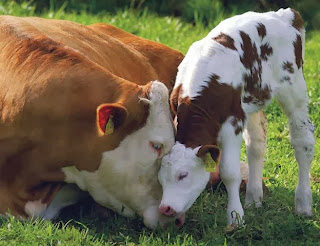 Dairy milk is not made for humans. The formula in the breast milk of cows is designed to grow a calf from typical birth weight of 80 pounds to 700 pounds in the first year of life. Is your body in need of such dietary chemistry?
Cow's milk contains calcium, but can humans utilize and absorb it? Humans who have access to dairy typically have much higher incidents of bone fractures associated with osteoporosis. Though the dairy industry has found ways to convince the public, milk that comes from a cow isn't good for you.
Plant-based foods should be scrutinized thoroughly. Just because a food product can be considered "vegan," doesn't mean that it's healthy or that the company that produced it made good choices on the consumers' behalf. Genetically modified soybeans, pesticide use, employee working conditions and wages, packaging, and transportation must be taken into account. This requires effort and time resources on the part of the consumer. What if you just want to grab a yogurt off the shelf and go?
On the shelves of larger grocery chains, one can find vegan suitable yogurt made from soy, almonds, coconut or blends. Very few of these are unsweetened. A six ounce cup of yogurt can have over 30 carbohydrates. WholeSoy & Company has been a reliable producer of unsweetened yogurt, but in 2013 the company found themselves without a manufacturing facility. They decided to build their own. You can read their saga here: http://www.wholesoyco.com/blog With the long absence of the product, some people have tried to make their own vegan yogurt at home. Not a fan of following directions, even I was able to make functional, tasty, probiotic vegan yogurt. Here's how:
Equipment needed:
 Dairy milk is not made for humans. The formula in the breast milk of cows is designed to grow a calf from typical birth weight of 80 pounds to 700 pounds in the first year of life. Is your body in need of such dietary chemistry?
Cow's milk contains calcium, but can humans utilize and absorb it? Humans who have access to dairy typically have much higher incidents of bone fractures associated with osteoporosis. Though the dairy industry has found ways to convince the public, milk that comes from a cow isn't good for you.
Plant-based foods should be scrutinized thoroughly. Just because a food product can be considered "vegan," doesn't mean that it's healthy or that the company that produced it made good choices on the consumers' behalf. Genetically modified soybeans, pesticide use, employee working conditions and wages, packaging, and transportation must be taken into account. This requires effort and time resources on the part of the consumer. What if you just want to grab a yogurt off the shelf and go?
On the shelves of larger grocery chains, one can find vegan suitable yogurt made from soy, almonds, coconut or blends. Very few of these are unsweetened. A six ounce cup of yogurt can have over 30 carbohydrates. WholeSoy & Company has been a reliable producer of unsweetened yogurt, but in 2013 the company found themselves without a manufacturing facility. They decided to build their own. You can read their saga here: http://www.wholesoyco.com/blog With the long absence of the product, some people have tried to make their own vegan yogurt at home. Not a fan of following directions, even I was able to make functional, tasty, probiotic vegan yogurt. Here's how:
Equipment needed:
- medium glass bowl
- small glass bowl
- 1 cup measure
- medium sauce pan
- candy thermometer
- wire whisk
- blender
- large towel
- glass bowl with tight fitting lid (or glass jars with lids)
- a place to incubate the yogurt like an oven with a light
- yogurt starter - this can be one container of store bought vegan yogurt or a non-dairy yogurt starter like Belle + Bella or Cultures for Health.
- 1 cup of raw, unsalted cashews
- 3 to 4 cups of filtered water
If you have a high-powered blender like a Vitamix (made in Ohio), you can put 1 cup of dried cashews directly in the Vitamix with 1 1/2 cups of water and blend until creamy smooth, adding water until preferred consistency is reached. (See the Vitamix recipe for cashew and almond milk here: https://www.vitamix.com/Find-Recipes/A/L/Almond-or-Cashew-Milk)
If your blender's power is NOT measured in horsepower, soak 1 cup of cashews covered in water until soft. In the blender, mix at high power with 1 cup of water, adding water until desired consistency is achieved to 1 liter or 1 quart yield.
Once you have 1 liter or 1 quart of cashew milk, heat the cashew milk in a sauce pan to 180°F, using the candy thermometer and taking care to not allow the thermometer to touch the bottom of the pan. As the temperature begins to rise, keep a careful watch and stir so that the cashew milk doesn't scorch or burn in the bottom of the pan.
The Vitamix has the ability to heat contents easily to the desired temperature to make yogurt. In all my trials and errors, however, I discovered that thickening is part of the process for a successful batch of yogurt. While Vitamix heated cashew milk may be 180°F, it is not the thick consistency achieved on the stove top. The end product from heating and stirring should be a thick cream.
Once 180°F has been reached, the cashew milk needs time to cool BEFORE adding the yogurt culture. Keep the thermometer in the cashew milk in order to gauge when the cashew milk has cooled to 108°F.
While waiting for the cashew milk to cool, turn your attention to the place where the yogurt will incubate and allow the space to begin to warm to 112°F to 115°F.
When the cashew milk cools to 108°F, remove 1 cup of the liquid and add the non-dairy yogurt starter or store-bought non-dairy yogurt to the 1 cup reserve. In a glass bowl with a tight fitting lid, return the one cup of yogurt starter and cashew milk back into the rest of the warm cashew milk base. Place the lid on the bowl and wrap the bowl in a large towel. Place the towel-wrapped bowl in the oven, food dehydrator, or in glass jars in a yogurt maker. Allow the yogurt to incubate for 5 hours. Some bloggers have allowed their yogurt to incubate for 10 hours.
After 5 or so hours, you should have a batch of creamy cashew yogurt that should be refrigerated.
Once you have created a successful batch of cashew yogurt, experiment with different blends of organic soy, almond, coconut until you achieve your signature yogurt. Reserve 6 to 8 ounces of yogurt as a starter for your next batch.
Subscribe to:
Posts (Atom)


- Follow Us on Twitter!
- "Join Us on Facebook!
Contact